
Top 5 Neural Networks for Video Generation: A Large-Scale Test Drive in Real-World Conditions
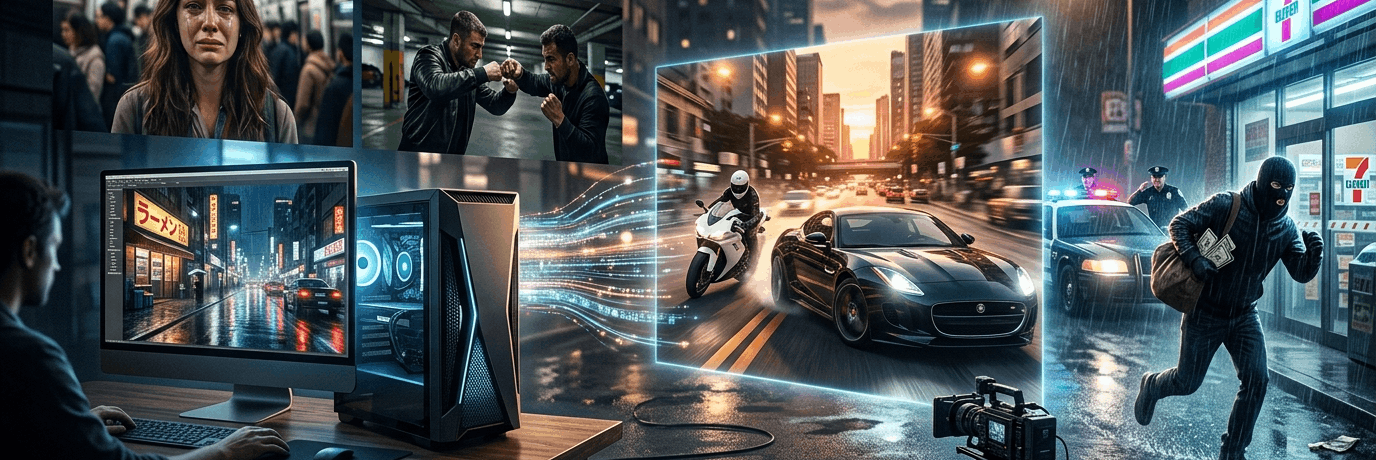
To find out, a large-scale experiment was conducted. We took 5 popular neural networks, fed them 5 identical prompts of varying complexity (from simple atmospheric scenes to complex fights and dynamic chases), and compared the results. The testing was conducted through the AI aggregator Syntx AI.
Overview of the 5 Best AI Video Generators
Before we get to the battle results, let's get acquainted with the main tools on the video production market.
1. Veo 3
-
Features: An excellent middle ground for both beginners and pros. Understands prompts in Russian perfectly and is relatively inexpensive.
-
Best suited for: Creating high-quality animation and 3D animation.
-
Drawbacks: Struggles with complex mechanical actions (e.g., physical interaction between people).
2. Kuaishou Kling AI
-
Features: A powerful Chinese model that sets trends in motion animation.
-
Best suited for: Action scenes, simulating fights, acrobatics, and car physics.
-
Drawbacks: Does not understand Russian (prompts must be written strictly in English), otherwise it may produce an error or an irrelevant result.
3. Luma Runway
-
Features: One of the pioneers in the market that maintains a high-quality standard. Recently updated, the AI now allows for precise changes to clothing, hairstyles, and objects in videos.
-
Drawbacks: Results are unstable — it can produce either a masterpiece or anatomical nonsense with crossing limbs.
4. Kling AI / Seedance 2
-
Features: A completely different level of generation and the most expensive model on the list. Allows uploading reference videos, images, and even music for scene control.
-
Best suited for: Full-fledged AI cinematography and creating AI series.
-
Drawbacks: High cost of generation.
5. Grok
-
Features: Was free for a long time, now available via subscription. It is a major competitor to Veo 3.
-
Best suited for: Simple, but photorealistic and atmospheric shots. Delivers good quality for a reasonable price.
Prompt Battle: Which Neural Network Handles Complex Tasks Better?
Round 1. Atmospheric Prompt (Cinematic Lighting and Facial Expressions)
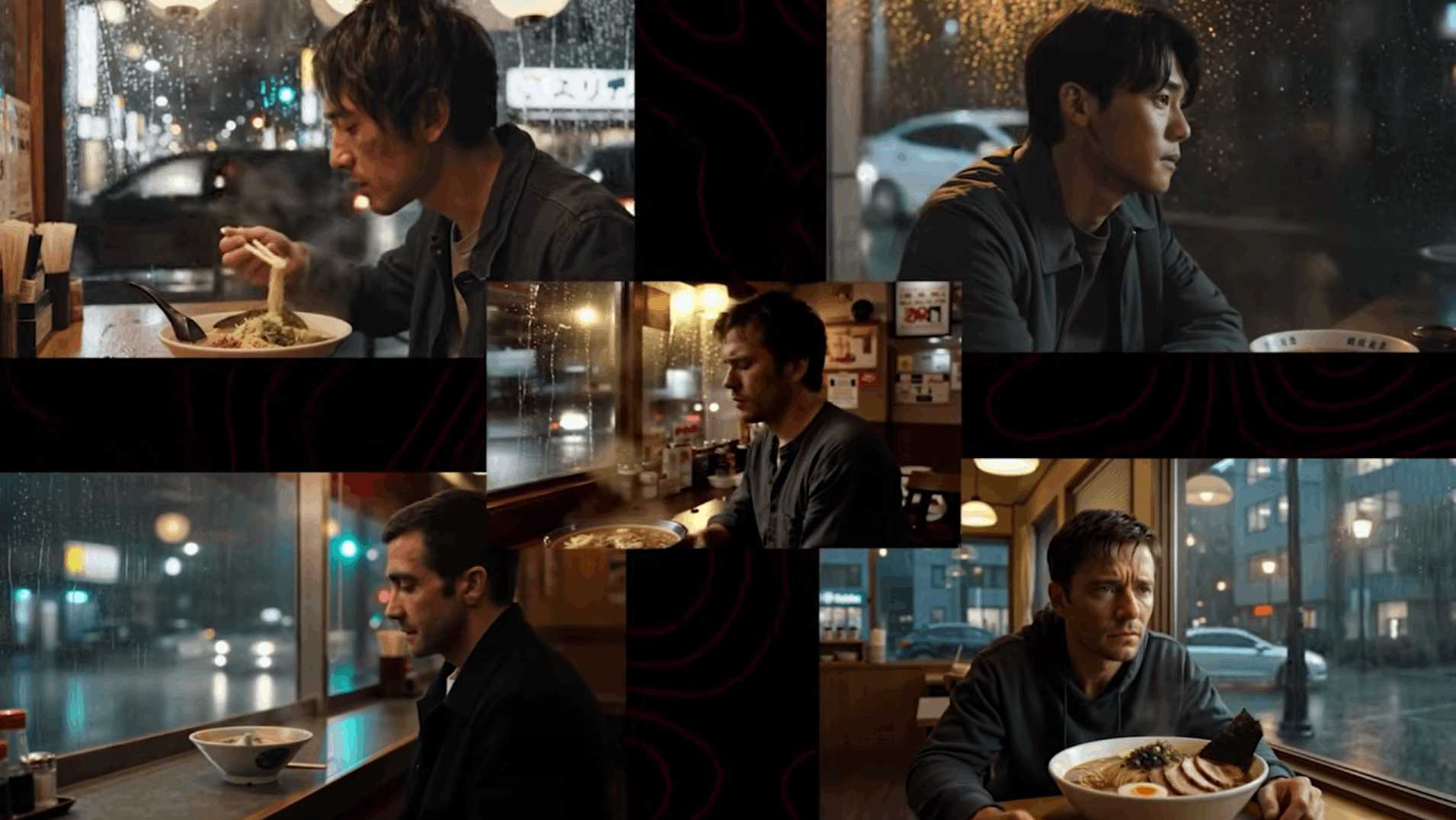
Prompt. A tired man in his 30s+ sits alone in a small ramen shop under a torrential night rain. The camera slowly moves around him, warm light reflects off the wet window. Steam rises from the ramen. A car with blurred headlights passes outside. The man silently looks out the window, deep in thought. Cinematic lighting.
-
How the neural networks performed. This was a relatively simple request, and most models performed well. However, Veo 3 made the hero eat (though it wasn't in the prompt), and Runway produced a somewhat empty image. One of the models added a strange camera shake.
-
Round winner: Grok. It perfectly conveyed the man's facial expressions, the texture of the food, and the cinematic, realistic atmosphere without any visual bugs.
Round 2. Dynamic Chase (Motion Physics and Reflections)
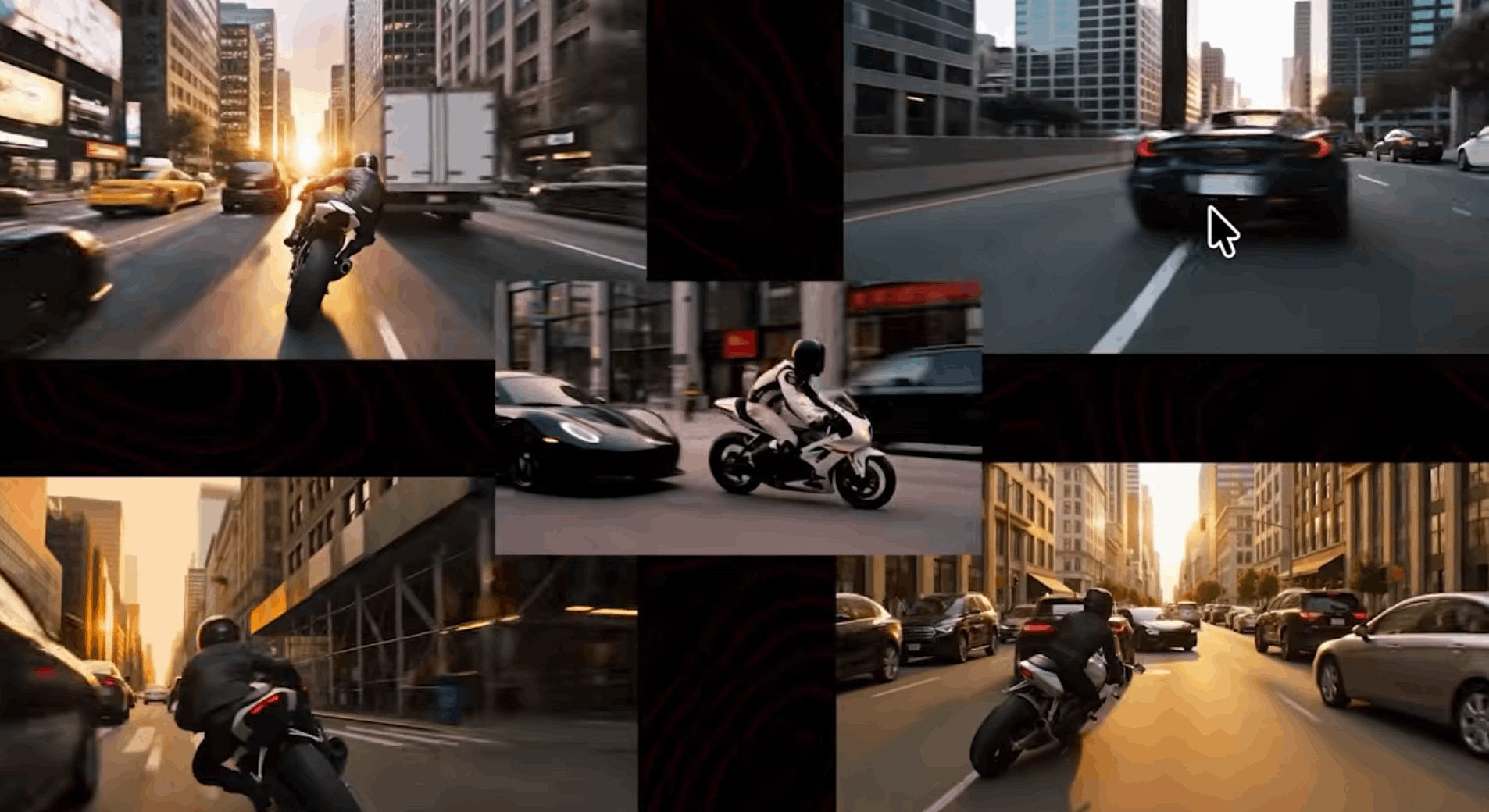
Prompt. A black sports car aggressively pursues a white motorcycle along a busy city street at sunset. The camera follows closely behind, cars quickly swerve aside. The motorcyclist narrowly avoids a collision. The sunset reflects off the windows of the buildings. Realistic motion blur.
-
How the neural networks performed. This is a difficult task for AI — to understand who is chasing whom. Some neural networks glitched; for example, one car suddenly started reversing, another just began running over the motorcyclist. Seedance 2 unexpectedly delivered a weak result on the first try.
-
Round winner: Kling AI. It flawlessly composed the shot: the black car pursues the motorcycle exactly as per the prompt, and the light quality and speed look stunning. Runway also delivered an excellent result.
Round 3. Action Scene (Human Interaction and Fight)
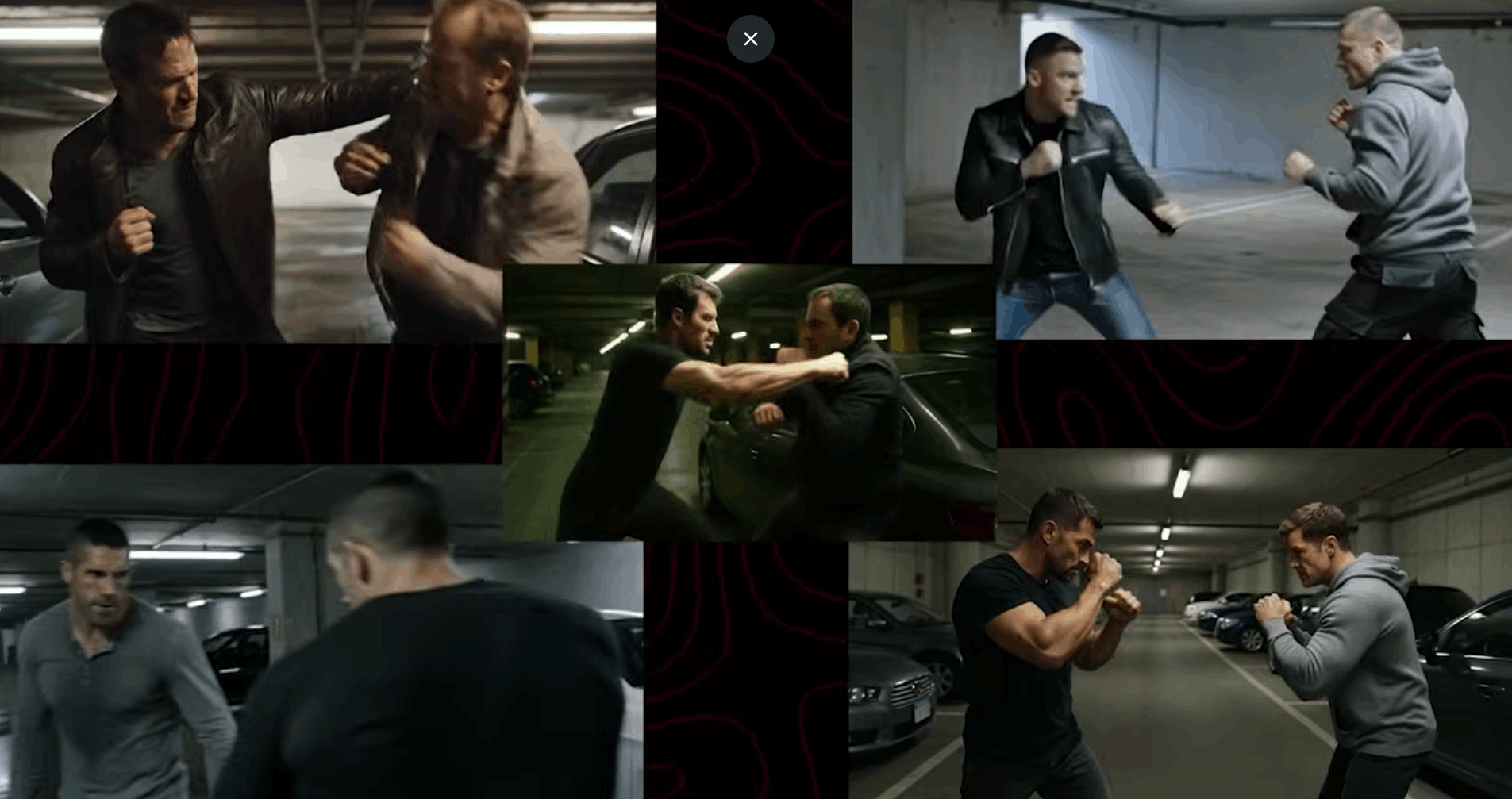
Prompt. Two men fight in a narrow underground garage under flickering fluorescent lights. One throws a punch, and the other blocks it and shoves him into a parked car. The camera moves handheld. The men's clothing flaps.
-
How the neural networks performed. Animating fights is a nightmare for AI. Most participants produced "rubber" punches or textures passing through each other (crossing arms). Kling AI's heroes simply froze and stared at each other at one point.
-
Round winner: Seedance 2. The only neural network that created a truly cool, cinematic action sequence. The man blocked the punch and realistically flew back into the car.
Round 4. Conveying Emotion (Close-up and Tears)
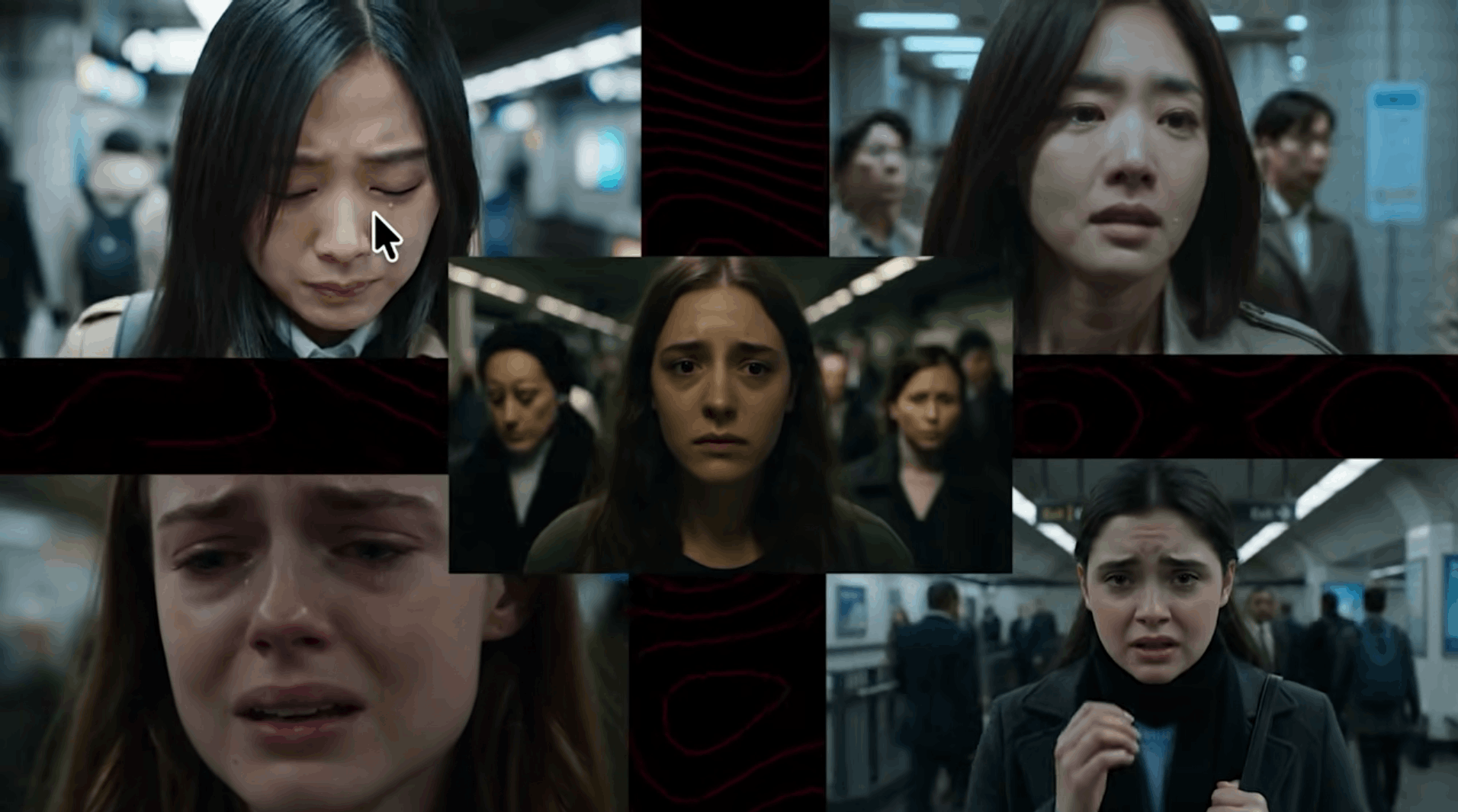
Prompt. A young woman walks through a crowded subway station during rush hour, trying not to cry. People move quickly around her. The camera slowly zooms in on her face, and tears appear in her eyes.
-
How the neural networks performed. Veo 3 produced a strange white tear that instantly evaporated. Runway generated a horror frame where the girl just silently stares straight ahead. Grok added an unnecessary and unnatural hand movement.
-
Round winner: Kling AI. The neural network perfectly conveyed the emotions, avoided deformations of the passersby's faces, and maintained an appropriate shot scale as the camera zoomed in.
Round 5. Hollywood-Style Scene (Complex Multi-Character Composition)
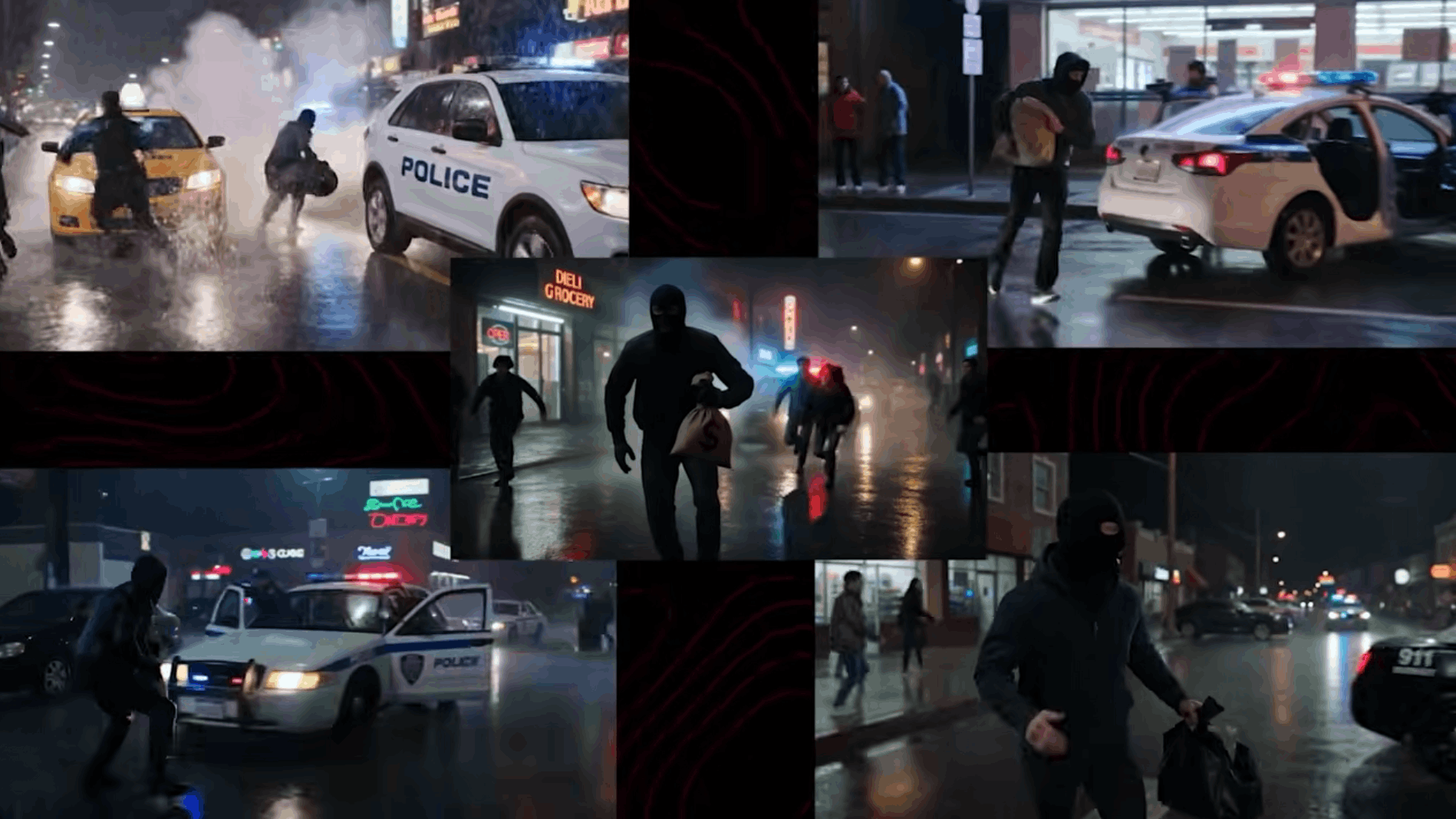
Prompt. A robber in a mask runs out of a store at night with a bag of money. Suddenly, a police car pulls up, and two officers jump out. The robber runs across the street, and cars come to a screeching halt. Heavy rain falls, with neon signs.
-
How the neural networks performed: The most complex prompt. Most networks completely failed the timing and logic — the policemen were either inside the store before the robbery or just got out of the car and stood there like "wooden" figures.
-
Round winner: Seedance 2. Maximum realism, a deep atmosphere of a rainy night city and neon lights. The only micro-bug was a too-sudden car stop, but compared to the competition, it looked like a full-fledged Hollywood movie.
Experiment Summary: Which AI Video Generator to Choose in 2026?
Based on the results of the five tests, the final score is as follows:
-
Seedance 2 — 2 points (winner in complex, narrative scenes)
-
Kling AI — 2 points (winner in dynamics and conveying emotion)
-
Grok — 1 point (best in simple atmospheric shots)
Verdict. If your goal is to create AI series, short films, and commercial videos with full scene control, your choice is Seedance 2 or Kling AI. If you need simple, aesthetic shots for social media without overpaying — use Grok or Veo 3.
You can test and combine all these neural networks in one place (without needing to buy a subscription for each separately) via the unified platform Syntx AI — both on the website and directly from your smartphone on Telegram. Use the promo code SEE in the aggregator for a 15% discount on the subscription and free starter generations.