


There are too many AI tools: which neural networks are really needed for work?
It seems the neural network market has finally gone completely mad. While you are reading this paragraph, a new video model, an avatar generator, a ChatGPT killer, and yet another service promising to make you a millionaire in three prompts have already been released somewhere. There is only one problem: no one has time to test all of this anymore. Creators do not need a hundredth directory of neural networks; they need a clear tool they can use every single day.
What is happening with the AI tools market: types of AI, the Grok neural network, and the new race of services
Just three years ago, everything was relatively quiet. For text, people opened ChatGPT. For images — Midjourney. For video, there were a few notable services. Even reviews of neural networks fit into a single article without the risk of spraining the reader's finger from endless scrolling.
Today, the market resembles a home improvement hypermarket where you were sent to buy a single light bulb. Two hours later, you are standing between the aisles of drills, screwdrivers, and hammer drills, already holding some kind of circular saw, and completely failing to understand why you came in the first place.
New models appear every week. Some promise a revolution in image generation. Others release yet another ChatGPT competitor. Still others claim that their Grok neural network or a new multimodal system is already smarter than half the internet.
Against this background, the content creator begins to live in the mode of an eternal technology taster. They compare interfaces, study pricing plans, watch reviews, read forums, and gradually forget that their job is, after all, not to test neural networks.
A strange situation emerges. Artificial intelligence was created to free up time for creativity. But many specialists now have yet another full-time task — constantly choosing between hundreds of AI tools. Sometimes it feels as if neural networks have started producing new neural networks faster than humans can manage to use the old ones.
>>> And we have already tested a few things for you: TOP-5 neural networks for video generation: a big test drive in real conditions<<<
Which neural networks are most commonly used in Russia for text, images, and video
If we cast aside the marketing noise and look at which services people actually use every day, the picture becomes quite clear.
Rating of popular models: Claude neural network, Grok neural network, AI in Russian, and other market leaders
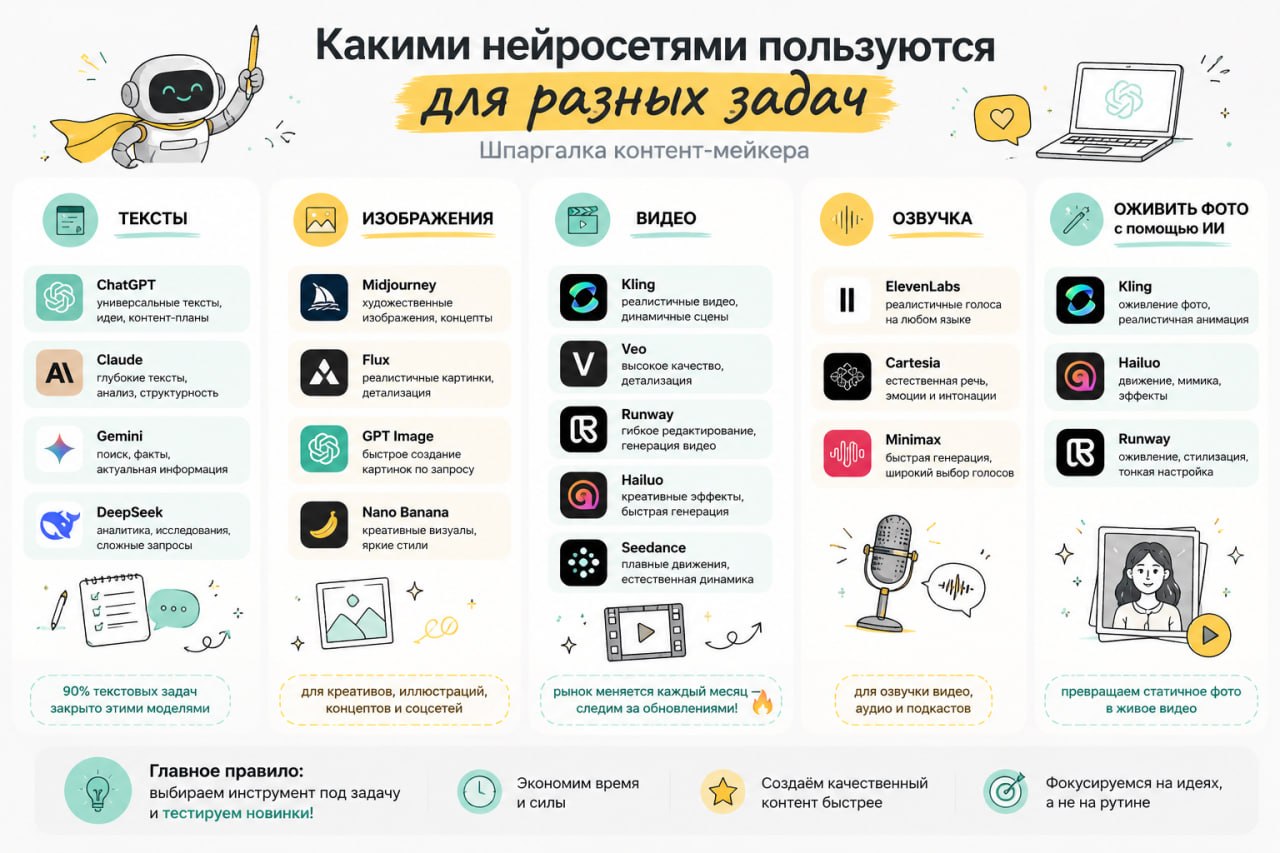
For text, the leaders remain ChatGPT, Claude neural network, Gemini, and DeepSeek. For most marketers, editors, and writers, these models handle 90% of tasks: from content plans to scripts, research, and advertising copy.
For images, Midjourney, Flux, GPT Image, and Nano Banana are most frequently used. Today, they allow users to quickly create advertising creatives, illustrations, concepts, and visuals for social media.
With video, it gets even more interesting. Kling, Veo, Runway, Hailuo, and Seedance are actively used here. Moreover, the market changes literally every month. While one service becomes popular, another releases an update and flips the leaderboard all over again.
For voiceovers, ElevenLabs, Cartesia, and Minimax are popular. For tasks like where you can animate a photo with AI, users most often turn to Kling, Hailuo, and Runway. Some are still looking for a magic button like "Alice, animate this photo," but the reality of life is that beautiful results usually come from very specific, professional tools.
The list looks logical. But this is exactly where the most fun begins.
For a single project, a specialist can use five to six services at the same time. First, open Claude. Then ChatGPT. Next, switch to Flux. Then to Kling. Then to ElevenLabs. Then return back. And somewhere between all these actions, one still needs to find time to actually create the content itself.
Vasily's story: how a typical content creator works in 2026
Five services, eight tabs, and a mild nervous disorder
Meet Vasily.

Vasily manages a Telegram channel for a travel service. Every day, he needs to publish posts, generate visuals, make short videos, and come up with new ideas. The job seems creative. But if you look at it closely, it becomes a bit alarming.
In the morning, Vasily opens Claude and asks to come up with ten travel topics. Then he moves the results to ChatGPT because he likes the style there. Next, he creates a content plan and writes the posts. By lunchtime, he already has six tabs open, and his eye starts twitching.
Then the visual part begins. He needs to make a Bali beach in Midjourney. Get a few more options in Flux. Then the client asks to replace the girl with a surfer. Then it turns out the surfer isn't happy enough. Then too happy. Then happy, but for some reason resembles an air conditioner sales manager.
After that, the video work starts. Vasily opens Kling. Then Runway. Then another model. Next, he looks for a service that can create an AI face for a character. Then he tests generators where one can create AI characters without restrictions. Then he remembers that he still needs to find a good neural network to animate a photo somewhere.
By evening, his desktop looks like the aftermath of a digital hurricane. The folder contains files: final.jpg, final_new.jpg, final_real.jpg, final_real_final.jpg, final_real_final_last.jpg. It hurts just to read this, doesn't it?
Formally, Vasily worked with artificial intelligence all day. But in reality, it felt like unloading cement trucks.
>>> How content creators can get rid of burnout <<<
Why creators got tired of choosing and started looking for AI aggregators
When you need a proper ecosystem instead of a new service: aggregator features and a convenient AI service aggregator
The funniest part is that the problem has long ceased to be technical. The quality of modern models is already at a very high level. Most popular services know how to create good text, images, and videos. The difference between them is becoming less and less noticeable to the average user.
The issue has moved somewhere else. Imagine that you were given twenty screwdrivers. Then twenty more. Then another fifty. Formally, you have more tools. Practically, working has become harder because now you spend half your time choosing the right screwdriver.
The exact same thing happened with neural networks.
That is why the popularity of new-generation solutions is growing today. They are called by different names: GPT aggregator, AI service aggregator, AI hub, or unified workspace. Their essence is the same. They gather different models in one place and allow you to work with them as a single system.
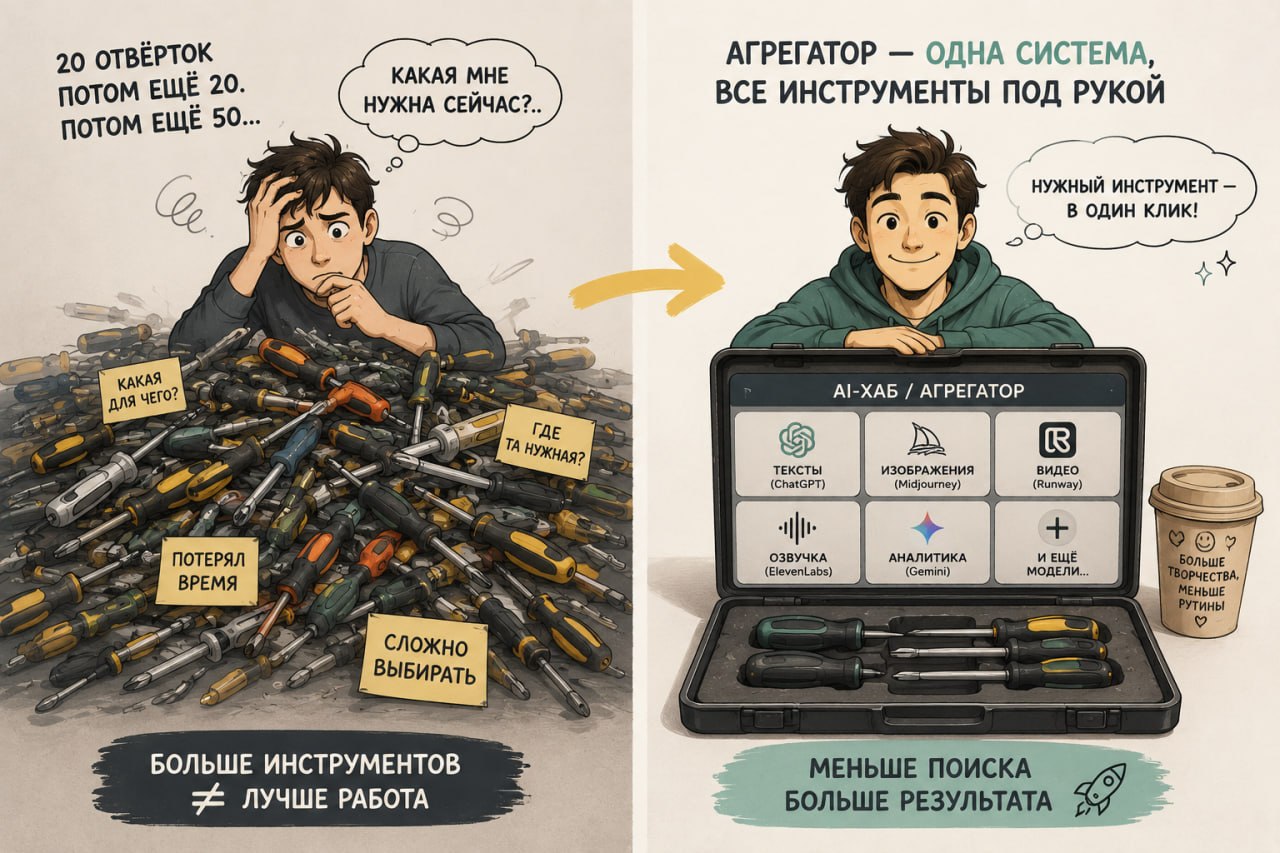
This is precisely what the core features of aggregators are all about. They eliminate unnecessary transitions between services, reduce the number of subscriptions, and give the user back the ability to focus on the result rather than the endless fine-tuning of tools.
Alexey's story: how a content creator works through Syntx.ai
One account, web version, Telegram bot, and 90+ neural networks at your fingertips
Now, let's meet Alexey.
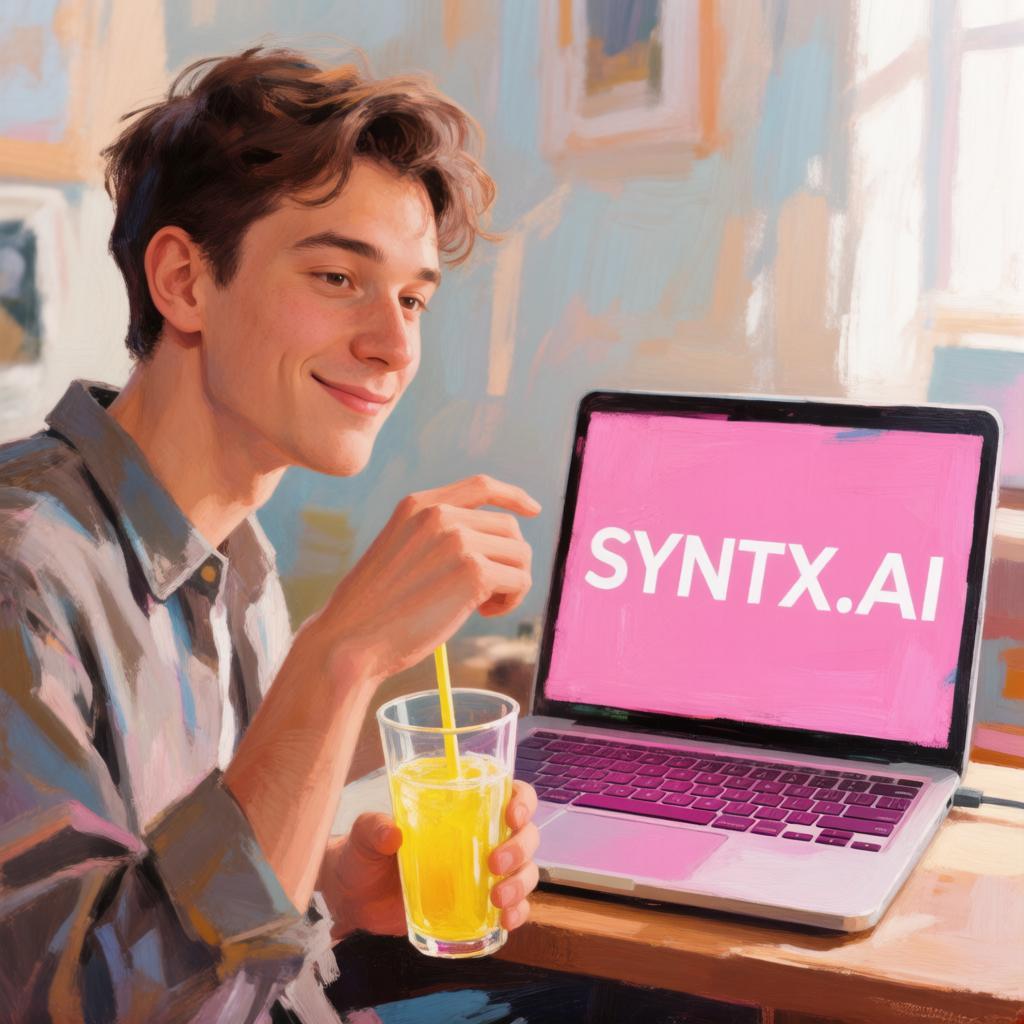
Alexey also works with content. Only one day, he got tired of paying monthly for five services at the same time and trying to remember which VPN was currently working with which neural network. That's how he found Syntx.ai.
Syntx bot review: how Syntx combined ChatGPT, Claude, video, and graphics models in a single system
If you look at the market without emotion, it becomes obvious: most specialists use roughly the same set of tools. Text models. Image generators. Video. Voiceovers. Character creation.
That is why Syntx took the path of combining popular models within a single system. This AI aggregator actually manages to provide access to more than 90 neural networks through a single interface. Here, you can work with ChatGPT, Claude, Flux, GPT Image, Kling, Veo, and many other models without constantly switching between services.
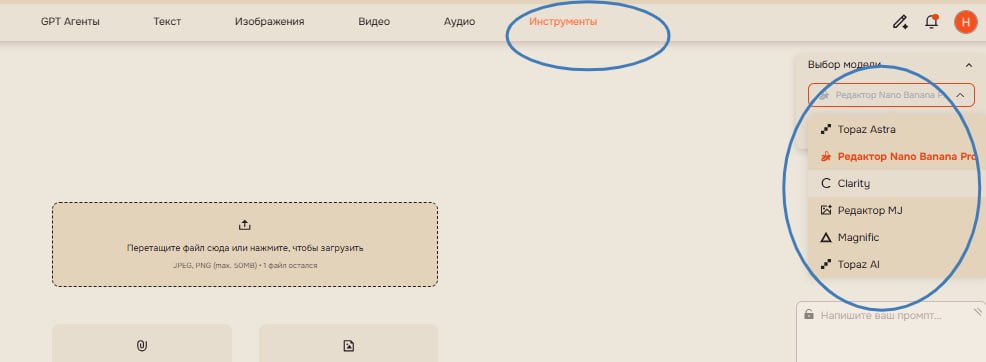

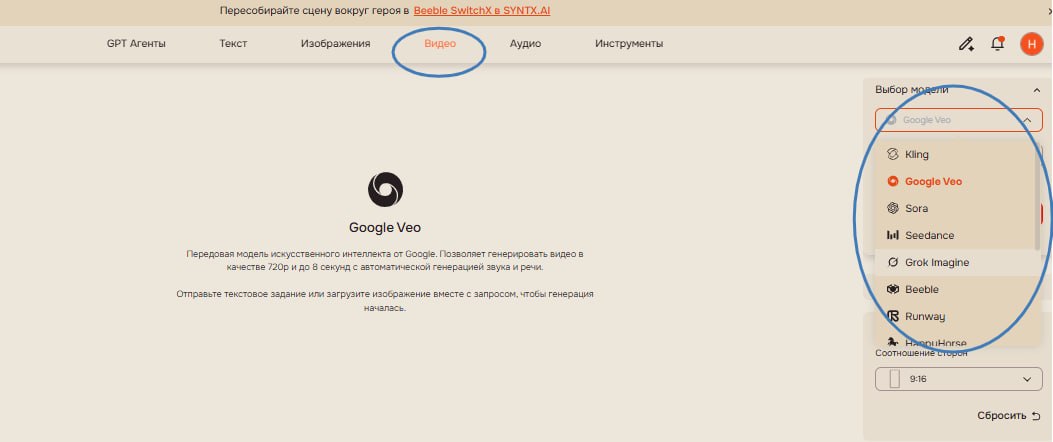
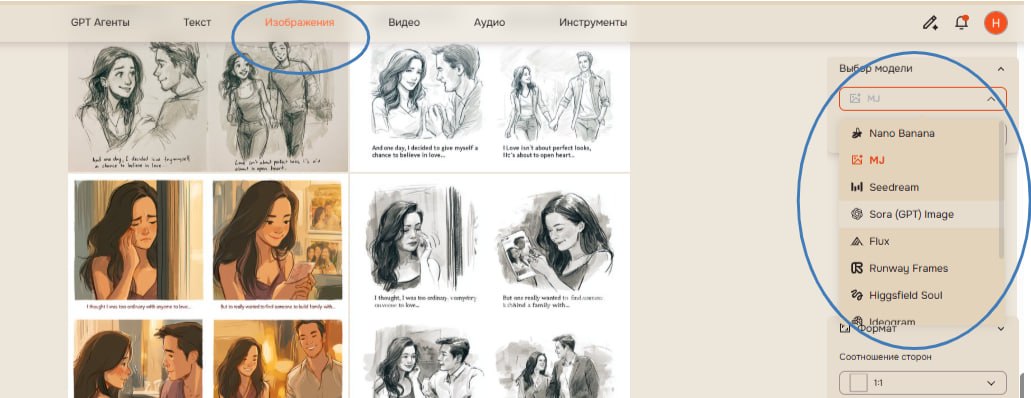
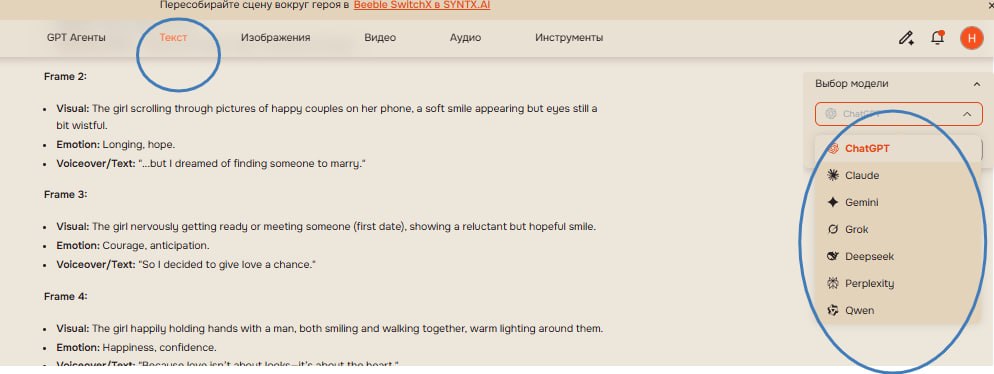
It turns out to be a kind of digital Swiss Army knife for a content creator. Only instead of blades and screwdrivers, it holds the most in-demand AI tools on the market.
Why an AI Telegram bot is gradually replacing dozens of individual services
The mobile workflow scenario looks especially interesting. Previously, any urgent client request meant one thing: looking for a laptop. Then looking for the internet. Then trying to remember the password for the right service. Today, everyone works differently.
With Syntx, there is a full-fledged AI Telegram bot that allows you to use the exact same models right from your smartphone. For many specialists, this turns out to be unexpectedly useful. Because for some reason, ideas, edits, and tasks love to pop up while you are waiting in line for coffee, at the airport, or five minutes before a meeting.
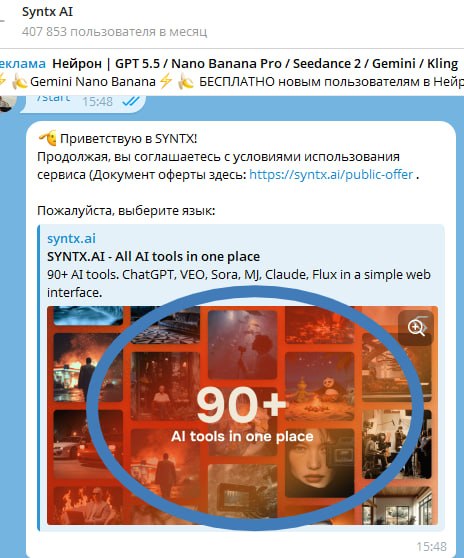
Chatting with the bot is very simple, and it delivers gorgeous results. Here is an example of how it created literal rich content for a marketplace product card based on a short description:

Web version + Telegram bots 2026: how to work on projects from a laptop and a smartphone without losing speed
In general, if you look at Telegram bots in 2026, it becomes clear where the market is heading. People no longer want to keep a separate set of tools for the computer and a separate set for the phone. They want a single ecosystem.
In the case of Syntx, the user gets a web version for full work on a laptop and a Telegram bot for mobile scenarios. Moreover, everything works through a single account and one subscription.
A separate plus for the Russian market is payment with Russian cards. Many users have long been tired of looking for workarounds to access foreign services. Therefore, the ability to use familiar models without extra acrobatics is no longer perceived as a bonus, but as a basic requirement.
How to understand which neural networks you actually need for work
If you remove all the advertising fluff, most specialists need a surprisingly short set of tools. One strong model for text. Two models for images. One or two video generators. One service for voiceovers.
That is where the list usually ends.
In reality, no one becomes more productive by testing forty-seven new services every month. Moreover, the opposite effect often occurs. A person starts spending time not on creating content, but on searching for the perfect tool for content creation.
Do you need a separate service for the "neural network animation" task or is a single aggregator enough
A simple principle works here. If a task arises rarely, there is no point in buying a separate subscription for it. Today, many aggregators already include tools for generating images, videos, animation, and scripts inside.
Therefore, before every new payment, it is useful to ask yourself a question: do I really need this neural network every day, or have I fallen into the trap of technological curiosity again? Very often it turns out that the second option is closer to the truth.
Conclusion: a good tool today is one that eliminates the need to choose
Why an AI service aggregator becomes a logical evolution of the AI market
A few years ago, everyone was looking for the best neural network. Today, people are increasingly looking for the best way to stop thinking about neural networks altogether.
The market has reached a point where the problem is no longer the lack of technology. There is too much technology now. Therefore, value is gradually shifting from individual models to systems that can gather them in one place. This is exactly why solutions like Syntx.ai appear. They allow you not to choose between dozens of services every day, but to focus on work instead.
Because a content creator's work should look like content creation. Not like an archaeological expedition through twenty browser tabs in search of a file named final_final_final_v7_definitelyfinal.mp4.
____________________________________
Promo code for a 15% discount and free starting generations: PAYBACK
The links also provide a 15% discount and free starting generations.